Yongkang Zhida Industry and Trade Co., Ltd.
A monitor mounting system can look simple until it needs to be installed across different desks, office environments, and workstation layouts. The quality of the mounting base, connection method, and structural design can directly influence how confidently a display stays in position during everyday use. For office furniture brands, distributors, and OEM buyers, selecting a Monitor Arm is therefore not only about display adjustment. Installation compatibility and mechanical stability are equally important when developing a reliable workstation solution.
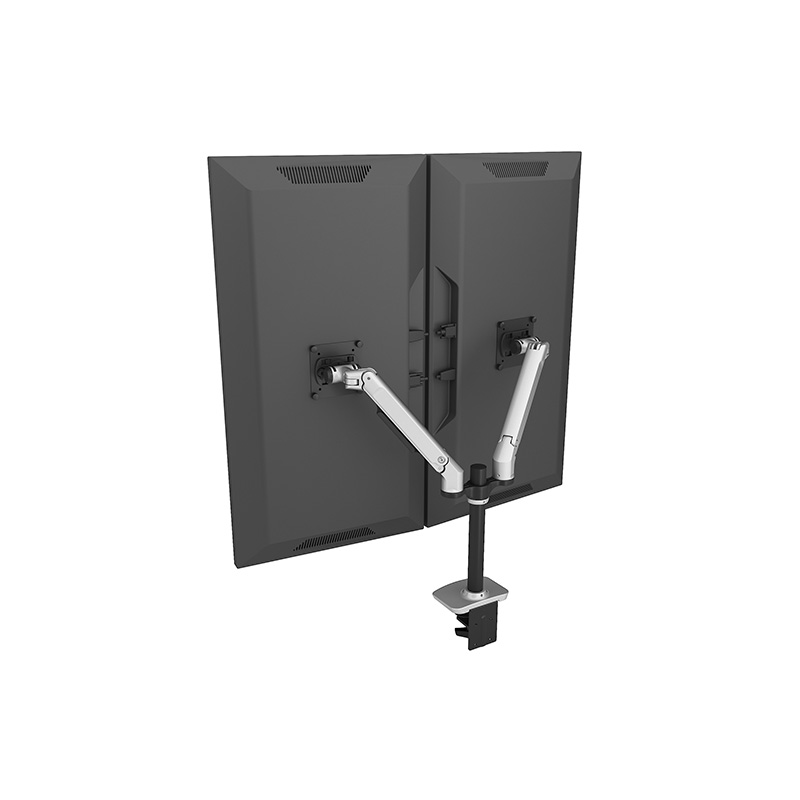
The connection between the arm and desk carries the load of the complete display assembly. If the mounting structure is poorly matched to the desk, even a well-designed arm may become difficult to install or adjust.
Different workstations can have different desktop thicknesses, edge shapes, available clearance, and structural conditions. A practical mounting system should therefore provide a secure connection while remaining convenient for installation and removal.
For manufacturers and procurement teams, reviewing the base design at the beginning of product selection can help prevent compatibility issues from appearing during installation.
Desk clamps are widely considered for workstations where permanent drilling is undesirable. They can provide a relatively straightforward way to attach a monitor arm while preserving the original desktop.
However, the clamp needs to work together with the desk rather than simply grip its edge. Contact surfaces, fastening components, support plates, and load distribution all influence installation quality.
A well-developed clamp structure should make several aspects easier for users and installers:
These details become particularly relevant when large quantities of workstations need to be installed within a short project cycle.
Not every desk is suitable for a clamp-based solution. Some commercial workstations already include cable openings or dedicated mounting points, making a grommet installation a practical alternative.
From an engineering perspective, this configuration requires careful coordination between the mounting hardware and the desk structure. The mounting position, fastening method, cable routing, and available clearance all need to be considered together.
Offering more than one installation approach can also give distributors and office furniture manufacturers greater flexibility when developing workstation packages for different markets.
A stable monitor arm is the result of several components working together. The arm structure, joints, mounting plate, fasteners, and adjustment mechanism all contribute to how the display behaves after installation.
If one connection introduces unwanted movement, users may notice screen shaking or positional changes during normal operation. For this reason, manufacturers need to evaluate the complete mechanical system instead of treating the mounting base as an isolated component.
Consistent component production and controlled assembly are especially important for OEM orders, where similar performance is expected across repeated batches.
For office projects, installation time can become an important part of the overall purchasing decision. A mounting solution that is difficult to assemble may increase labor requirements and create additional opportunities for installation errors.
This is why buyers often benefit from considering not only the final appearance but also the installation process itself. Clear component organization, practical fastening methods, accessible connection points, and a logical assembly sequence can make deployment more manageable for installers.
Standard mounting solutions may cover common desk configurations, but OEM customers sometimes require adjustments for specific furniture designs or workstation systems.
As a Monitor Arm manufacturer, we can approach these requirements from the perspective of both product structure and production feasibility. Mounting components, connection methods, surface treatments, and packaging arrangements can be evaluated according to the customer's intended application.
This approach helps transform a monitor arm from a standard accessory into a more adaptable component within a complete workstation solution.
A successful monitor installation starts before the arm reaches the customer's desk. Buyers should evaluate desk construction, mounting position, installation method, adjustment requirements, and long-term stability as part of the initial sourcing process.
For overseas distributors, office furniture manufacturers, and OEM buyers, working with an experienced supplier can make it easier to identify potential installation issues during product development rather than after delivery. A thoughtfully engineered Monitor Arm can provide secure display support while giving workstation manufacturers greater freedom to serve different desk configurations and commercial projects.

We will reply to you within 12 hours after receiving the inquiry on working days. Or, give us a call.


Copyright © Yongkang Zhida Industry and Trade Co., Ltd. All Rights Reserved

China Stand Arm Monitor Factory


 English
 Español
 Deutsch
 عربى
 Nederlands
 Français
 日本語

