Yongkang Zhida Industry and Trade Co., Ltd.
A monitor arm needs to support displays while fitting naturally into a working environment. Although buyers often begin with load capacity and adjustment functions, material selection and surface finish also influence the product's appearance, construction, and suitability for different workstation settings. For businesses sourcing a Dual Monitor Arm, these details matter when developing a consistent product range for office furniture projects, workplace equipment distribution, or commercial installations. From a manufacturer's perspective, material and finish decisions should be considered alongside structural requirements, assembly methods, and the intended use of the finished product.
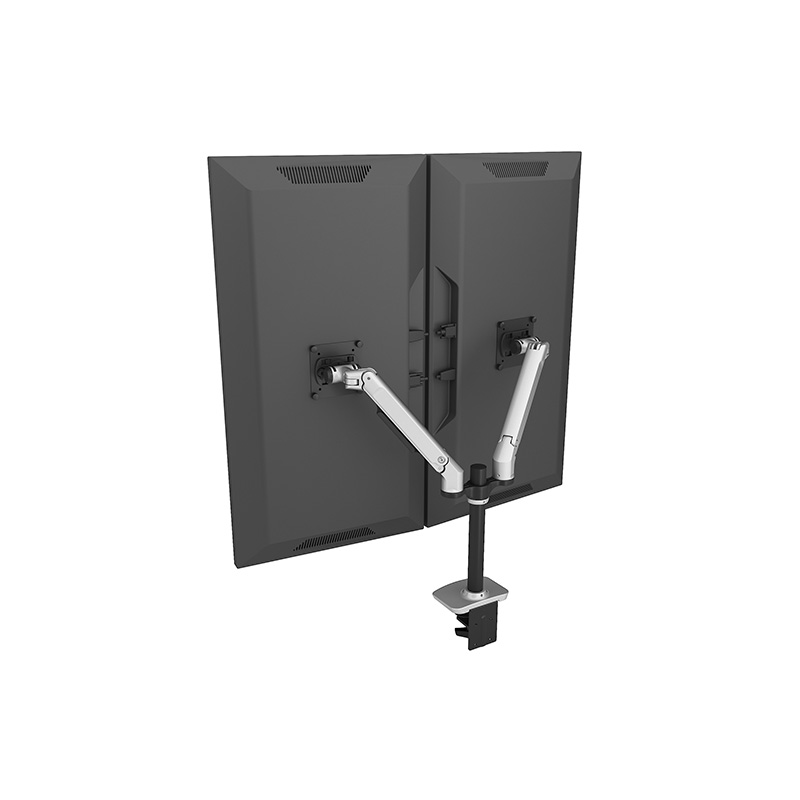
Different components perform different roles within a monitor arm. The main arm sections support and position the displays, while joints, fasteners, and mounting components connect the assembly and transfer loads to the desk. Material selection should reflect the function of each part rather than follow appearance alone.
During product development, manufacturers need to consider the required strength, stiffness, component geometry, and manufacturing process. Buyers should review the product's stated monitor capacity and intended configuration instead of assuming that a particular material automatically guarantees suitability. A clear specification makes it easier to evaluate whether the complete assembly is appropriate for the expected application.
A monitor arm is often visible throughout the working day, making its finish part of the overall workstation appearance. Color, texture, gloss level, and visible surface marks can affect how the product looks beside monitors, desks, and other equipment.
For distributors and project buyers, finish requirements should be defined before bulk production. Descriptions such as matte black or silver may not fully communicate the expected appearance, especially when several products need to be coordinated. An approved sample or clear visual reference can help buyers and manufacturers establish a shared understanding of the intended finish.
Material and surface decisions cannot be separated entirely from assembly. A finished component must fit correctly with adjacent parts, and its coating or finish should not interfere with the intended connection or movement.
When evaluating a sample, buyers can review several details:
These observations help assess the complete product rather than judging its appearance in isolation.
For importers and wholesalers, repeat purchasing often requires the same model to maintain a consistent visual identity. Differences in color, gloss, texture, or visible component details can become noticeable when products are displayed together or supplied to the same project.
Manufacturers can use an approved sample and documented specifications as references during production. Buyers should identify which appearance details are essential and communicate any permitted variations before an order is confirmed. This creates a clearer basis for inspection and reduces the risk of different expectations between the purchasing and production teams.
A Dual Monitor Arm may be adjusted, installed, repositioned, and handled during routine workstation changes. These activities can expose certain surfaces and connection areas to repeated contact. Buyers should therefore consider the intended use and handling conditions when discussing material and finish requirements.
The relevant evaluation depends on the product design. Areas frequently touched during adjustment may need different considerations from surfaces that remain largely stationary. Clear application information helps the manufacturer assess which components require particular attention during development and inspection, without making unsupported assumptions about the performance of a finish.
Some buyers need a specific color, visual style, or component configuration to match their product range. Customization can be useful, but each requested change should be assessed for its effect on production, assembly, appearance, and the approved specification.
A practical approach is to separate essential requirements from optional preferences. Buyers can confirm the product's structural and functional requirements, then discuss available finish and appearance choices. If a change is approved, the updated reference should be documented so that subsequent production follows the correct version.
Consistent products begin with clear expectations about materials, component construction, finish, assembly, and inspection. When buyers define these requirements before production, manufacturers have a more useful basis for evaluating samples and maintaining the intended product configuration.
For overseas procurement teams, choosing a Dual Monitor Arm involves more than comparing the visible design or advertised functions. Reviewing material suitability, finish consistency, component fit, and documented specifications can support more informed sourcing decisions. A manufacturer that receives clear requirements can better evaluate the product against its intended application and establish a practical reference for future orders.

We will reply to you within 12 hours after receiving the inquiry on working days. Or, give us a call.


Copyright © Yongkang Zhida Industry and Trade Co., Ltd. All Rights Reserved

China Stand Arm Monitor Factory


 English
 Español
 Deutsch
 عربى
 Nederlands
 Français
 日本語

