Yongkang Zhida Industry and Trade Co., Ltd.
The appearance of a monitor mounting system is often the thing buyers notice, but the materials behind the product have a much greater influence on its practical performance. For office furniture brands, distributors, and OEM customers, material selection can affect structural strength, surface durability, assembly consistency, and the overall appearance of a workstation. A Monitor Arm intended for commercial use therefore needs to be evaluated as a complete manufactured product rather than simply as a metal accessory attached to a desk.
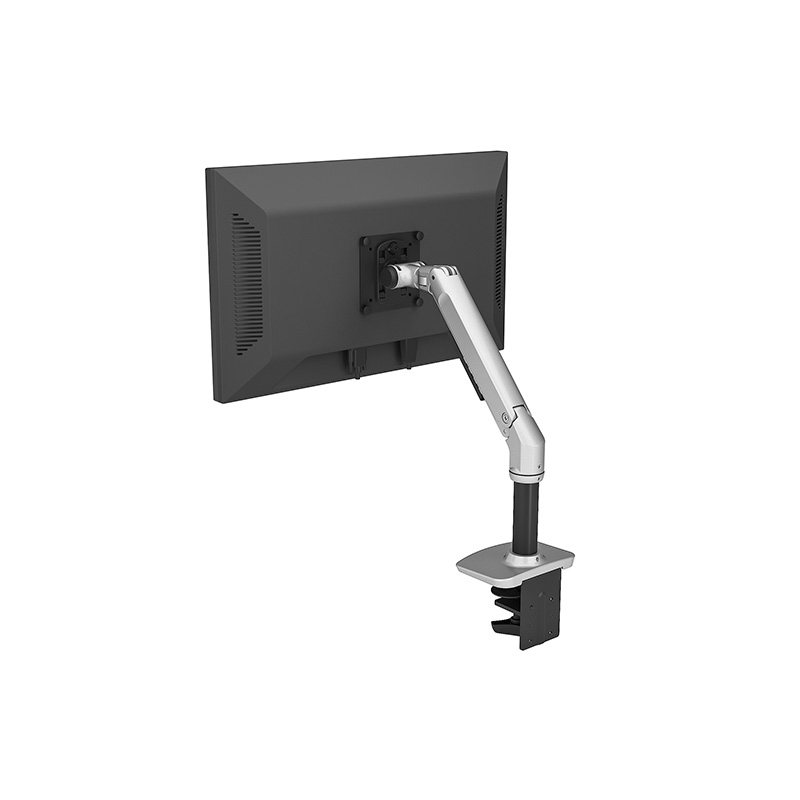
A monitor arm contains several components, and they do not necessarily require the same material characteristics. The main arm structure needs to provide dependable support, while joints and connection parts must accommodate repeated movement and fastening.
Mounting plates, bases, covers, and adjustment components may also have different production requirements. Selecting materials according to the function of each component allows manufacturers to balance structural requirements with production efficiency and product appearance.
For OEM buyers, this component-based approach can be useful when developing products for different workstation markets. It also provides more flexibility when customers need changes to individual parts rather than a completely new product structure.
Metal remains an important choice for many monitor mounting systems because it can provide a practical combination of rigidity, machinability, and consistent production. However, simply using metal does not automatically guarantee a well-performing product.
The design of the material and the manufacturing process need to work together. Wall thickness, connection points, bending areas, fastening positions, and load distribution can all influence the final structure. Poor coordination between these factors may create unnecessary material use in some areas while leaving other parts less suitable for their intended function.
This is why experienced manufacturers consider material selection during the early stages of product engineering rather than treating it as a purchasing decision after the design has already been completed.
A monitor arm is highly visible in an office environment, so surface finish can become part of the product's commercial value. A consistent finish helps the mounting system integrate with desks, monitor housings, and other workplace equipment.
Surface treatment can also influence how the product handles everyday contact, handling, and environmental exposure. For manufacturers supplying different markets, maintaining a consistent appearance across production batches is particularly important for private-label and OEM programs.
Buyers may therefore want to discuss:
These considerations can help reduce quality disputes after products enter the market.
Material selection and product quality cannot be separated from manufacturing precision. Components that appear simple may still require controlled dimensions to ensure that joints, covers, mounting plates, and fasteners fit correctly.
During mass production, inconsistent component dimensions can make assembly more difficult and may create variation between finished units. For commercial buyers, this can become especially inconvenient when hundreds or thousands of workstations use the same mounting system.
A manufacturer with controlled machining, forming, finishing, and assembly processes can reduce these variations and make production more predictable.
Not every Monitor Arm needs exactly the same construction approach. A product designed for general office work may have different priorities from one developed for premium furniture, professional workstations, or specialized commercial applications.
The right material strategy should consider the intended market, product appearance, manufacturing process, packaging requirements, and target cost. Instead of selecting materials based only on price, OEM buyers can work with manufacturers to determine where material quality provides meaningful value and where simpler solutions may be sufficient.
For brands developing their own monitor mounting products, the sample is only one stage of the process. The supplier also needs to demonstrate that the chosen materials and manufacturing methods can remain consistent during larger production runs.
As a Monitor Arm manufacturer, we evaluate material selection together with component design, manufacturing processes, assembly requirements, and finished-product inspection. This helps OEM customers move from an initial concept toward a product that can be manufactured consistently for commercial distribution.
Choosing the right mounting system involves more than comparing designs on a product page. Materials, structural construction, surface treatment, component tolerances, and manufacturing consistency all contribute to the final product experience.
For overseas office furniture brands, distributors, and procurement teams, discussing these factors with a capable manufacturer at the sourcing stage can help prevent avoidable quality and production issues later. When material choices are matched to the application and supported by controlled manufacturing, a Monitor Arm can become a dependable part of a complete workstation solution rather than simply another desk accessory.
We will reply to you within 12 hours after receiving the inquiry on working days. Or, give us a call.


Copyright © Yongkang Zhida Industry and Trade Co., Ltd. All Rights Reserved

China Stand Arm Monitor Factory


 English
 Español
 Deutsch
 عربى
 Nederlands
 Français
 日本語

